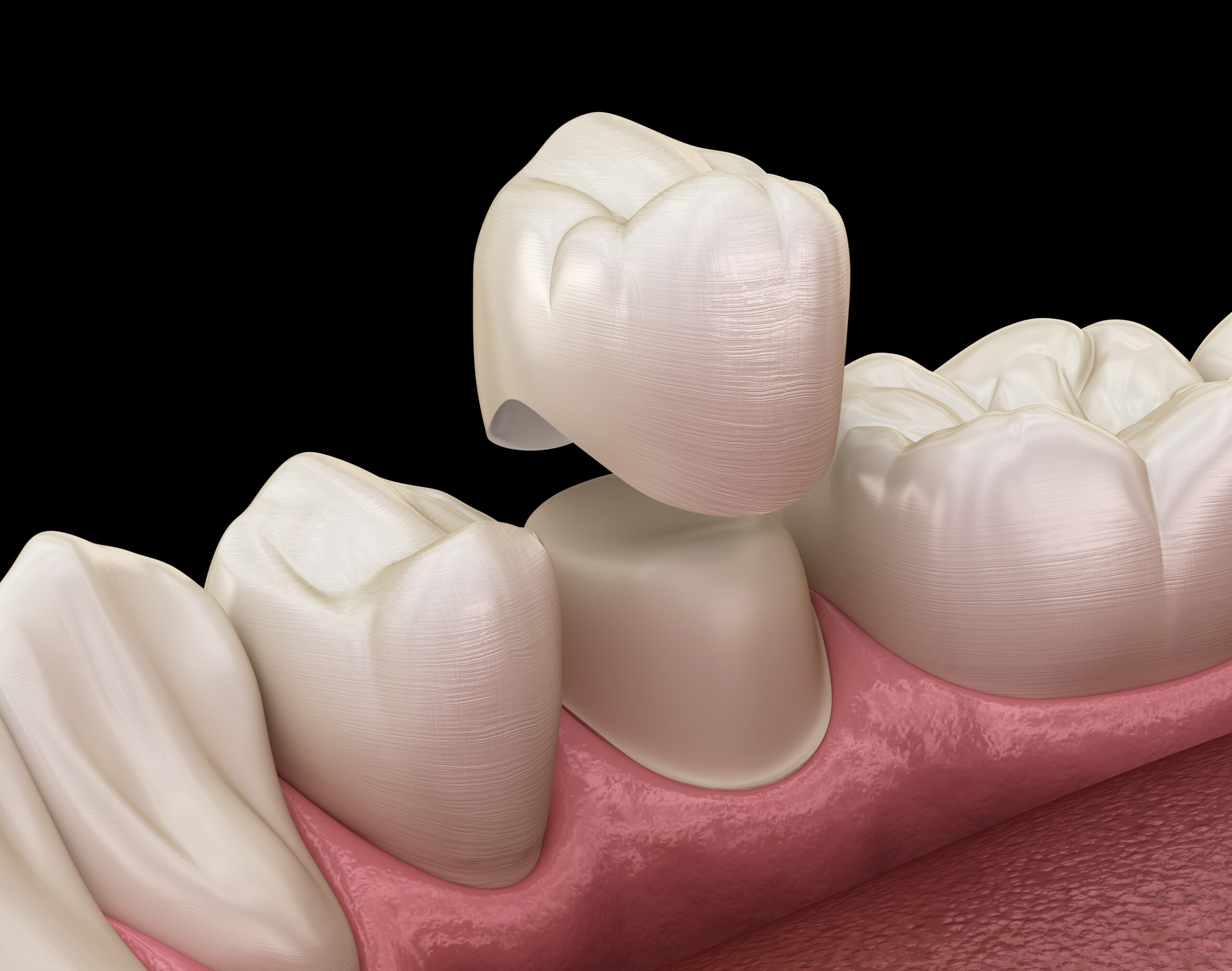
Dental crowns, also known as tooth caps, are custom-made coverings that encase damaged, decayed, or weakened teeth to restore their strength, shape, and natural appearance. Crowns are also used to cover dental implants, protect teeth after root canal treatment, or serve as anchors for dental bridges.
1. Porcelain-Fused-to-Metal (PFM) Crowns
Metal base covered with tooth-colored porcelain.
Balances strength and aesthetics; typically used for back or front teeth.
2. All-Ceramic / All-Porcelain Crowns
Outstanding natural look; no metal core.
Best for front teeth and patients with metal allergies.
3. Zirconia Crowns
Very strong, biocompatible, and highly aesthetic.
Suitable for both front and back teeth; available in high-translucency or layered styles.
4. E-MAX (Lithium Disilicate) Crowns
All-ceramic, lightweight, and known for beautiful translucency.
Great for visible/esthetic zones.
5. Gold Alloy and Metal Crowns
Extremely durable and require less tooth reduction.
Longest lifespan but less aesthetic; mostly used for molars.
6. Temporary Crowns
Made of acrylic or resin.
Protect the prepared tooth while waiting for the permanent crown.
First Visit
Examination and consultation: Dentist assesses tooth, takes X-rays, and discusses options.
Tooth preparation: Local anesthesia is given; the tooth is reshaped to fit the crown.
Impressions/Scans: Used to fabricate an exact model of your tooth.
Temporary crown: Placed for protection while the permanent crown is being made.
Between Visits
The dental lab crafts the custom crown based on your chosen material and color.
Second Visit
Removal of the temporary crown and cleaning.
Testing the permanent crown for fit, bite, and color match.
Cementing the crown securely in place and final adjustments as needed.
1. Practice Good Oral Hygiene
Brush twice daily and floss daily, especially along the gumline and crown margins.
Use a soft-bristled toothbrush and non-abrasive toothpaste.
2. Avoid Hard or Sticky Foods
Chewing on ice, hard candies, or sticky foods can damage or dislodge a crown.
3. Limit Staining Foods and Drinks
Minimize coffee, tea, red wine, and high-sugar foods to reduce risk of stains and decay.
4. Use Mouthguards if Needed
Wear a mouthguard if you grind your teeth (bruxism) or play sports to protect crowns and natural teeth.
5. Regular Dental Visits
Schedule check-ups every 6 months to ensure crowns and overall teeth remain healthy.
Professional cleanings help prolong crown lifespan and prevent gum disease.
6. Avoid Using Teeth as Tools
Don’t bite nails, open bottles, or tear packages with your teeth.
Regular visits to the dentist offer numerous benefits for maintaining optimal oral health. They help in early detection of issues like cavities, gum disease, and oral cancer.
A dental crown is a custom-made cap that covers a damaged, decayed, or weakened tooth to restore its shape, size, strength, and appearance. It also protects teeth after root canals and supports dental bridges or implants.
Common reasons include large fillings, cracked or broken teeth, after root canal treatments, heavily worn or discolored teeth, or to anchor dental bridges and implants.
Materials include porcelain (most natural-looking), ceramic, metal alloys, and gold. Porcelain and ceramic are popular for their aesthetic and durability.
Not always. Crowns often protect the tooth after root canals, but some dentists may avoid root canals if possible before crown placement
Maintain regular brushing, flossing, and dental checkups. Avoid biting hard objects, and consider a mouth guard if you grind your teeth.
We always take care of your smile
+254721 432335

Dentiplus: Where Quality Meets Affordability! A smile you deserve.